A sheet of wet paper, on a phone
Most painting apps
draw watercolour.
This one
behaves like it.
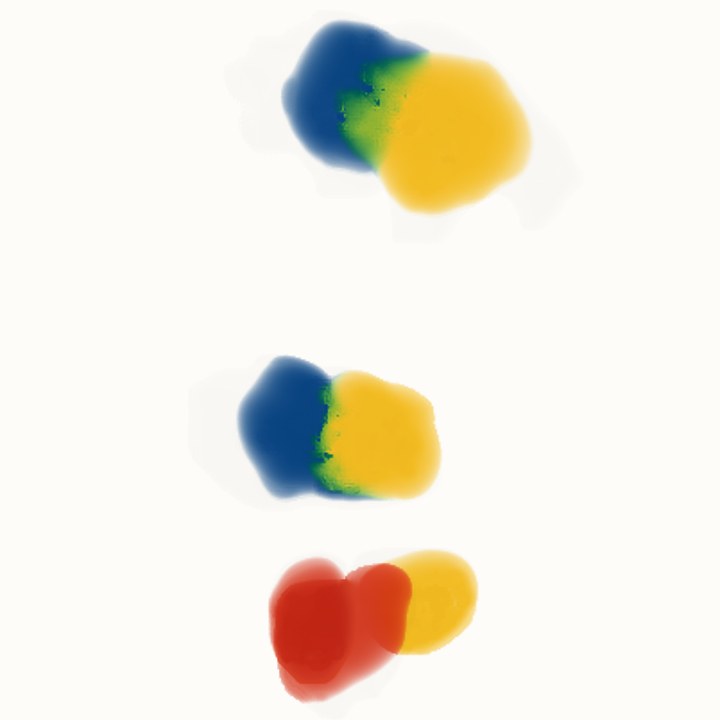
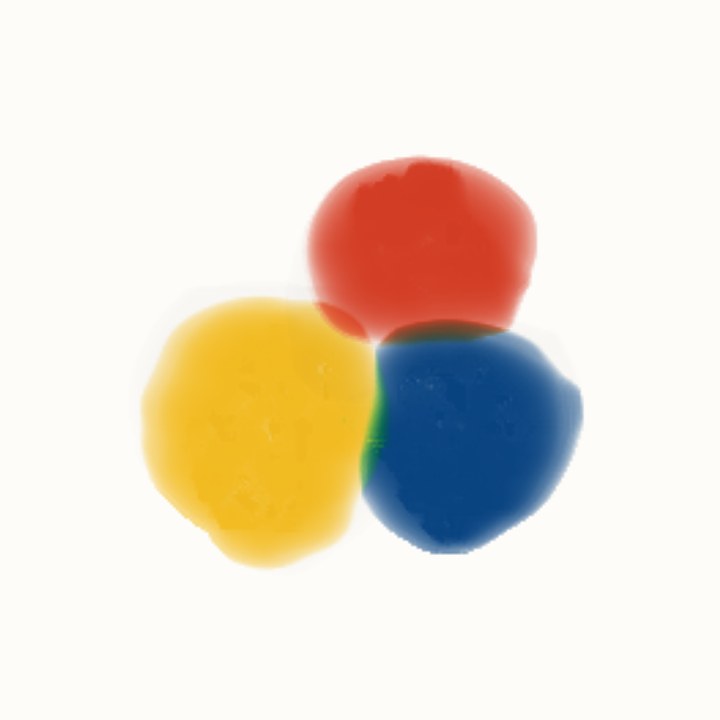
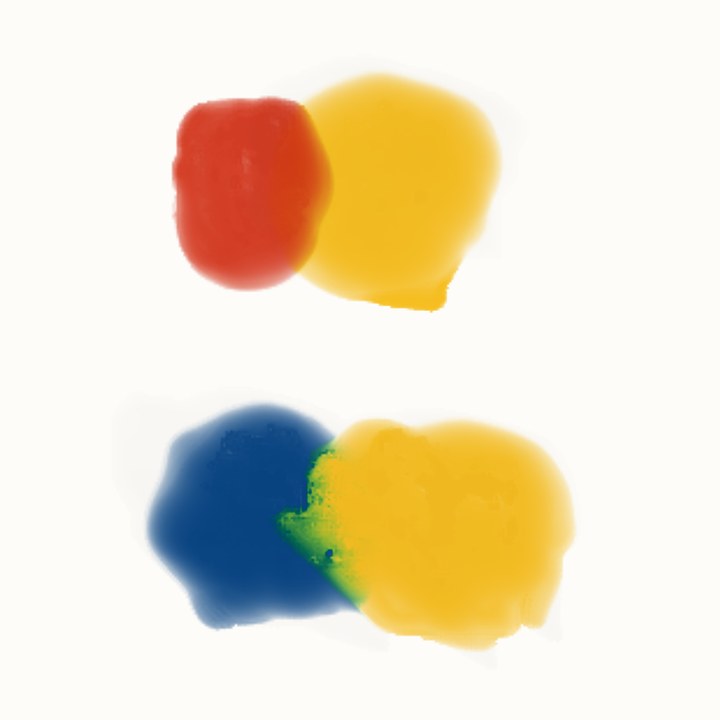
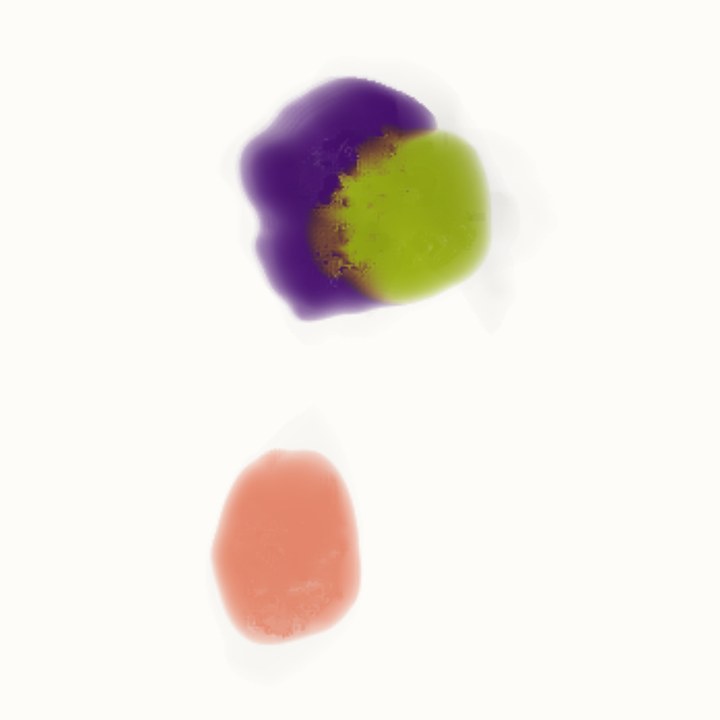
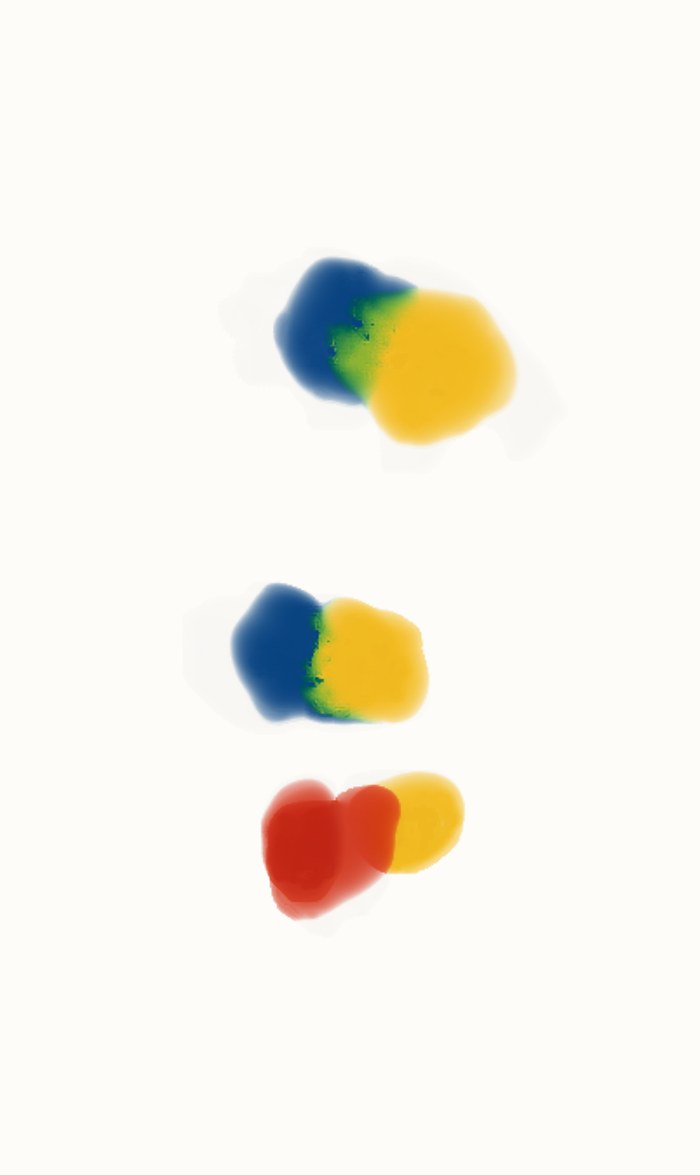
Painted in the app on an iPhone and saved. Cropped, nothing else. The green is where blue met yellow while both were wet.
Colours mix where they meet, the way pigments do. Tilt the phone and the water runs downhill and pools. Put a mark down, leave it alone, and it keeps going without you.
iPhone. No account, no ads, nothing sent anywhere.
Three things you can
feel through the glass.
All three are behaviour over time, which is why this page moves. A still picture of a wash looks like every other watercolour filter ever shipped.
Colour
Mixing happens on the paper.
There is no blend slider and no mixing well. Two wet marks that meet make the colour those two pigments would make, worked out with a pigment model rather than by averaging two screen colours. Any two colours mix, whichever card they came from. That is the difference between yellow over blue giving green, and yellow over blue giving grey.
There are four palettes, each a few paints, with some of each already thinned to a wash, the way a painter keeps a strong and a pale version of a colour side by side. One is five real watercolours: Hansa Yellow, Permanent Rose, French Ultramarine, Burnt Sienna and Ivory Black.
Gravity
The phone is the sheet, not a window onto one.
Lean it and the wet film runs, dragging pigment with it and pooling where it stops. It is not an effect applied to a picture. It is the same simulation being asked what happens when the paper is not flat, and the app learns which way you habitually hold the phone so that level means level for you.
Time
Waiting is a thing you can do.
A mark keeps moving after you lift your finger. It blooms outward while the paint is wet, pins at the edges as it dries, and stops when there is no water left to carry it, in about half a minute. Paint on dry paper and the edge stays crisp. Paint into a wash that is still wet and it softens. Lay a colour over one that has dried and it glazes, keeping its shape. When you paint is part of what you paint.
Every other app on the phone answers instantly. This one asks you to wait, and gives you something for waiting.
Authenticity
There is no undo,
and that is the point.
People are not wrong when they explore.
This is an app for exploring. A mark you did not expect is not a mistake to be rolled back. It is what the paper did with what you gave it. The answer to a mark you do not like is water, which lifts some of it, or another sheet, which is the answer the medium has always had.
It was built the other way first, which is how we know. Undo went in, worked badly, and came out. The reason it worked badly is the honest one: a wet stroke mixes with what is already on the sheet, so it cannot be inverted. Undoing it means storing whole sheets and keeping several of them alive beside a simulation already holding six full-screen textures. Taking it out gave back about twenty megabytes and removed the only part of the app that treated the medium like a document.
A painting is not a document. It has no history to step back through.
Under the shell
What is actually running.
The sheet is a field of cells, each holding how much pigment is there, what colour that pigment is, and how wet it is. Thirty times a second, water moves between neighbouring cells along the gradients that capillary action would follow, pigment settles into the paper where the sheet is drying, and the whole thing is resolved into a colour through a pigment model rather than by blending light.
It runs on the phone's graphics hardware, in a loop on the render thread. On a CPU the same work took sixty-five milliseconds a frame, which is seven frames a second and unusable. On the GPU it takes one, which is why the paper can keep moving while you are drawing on it.
There is no account, no server, no analytics, and no networking code at all. That is checkable in the source rather than a promise: nothing in the app can send anything anywhere.
The work behind it
Everything that was tried,
including what failed.
Each of these is a page built while making a decision, kept as it was written. Most of them record an idea that lost.